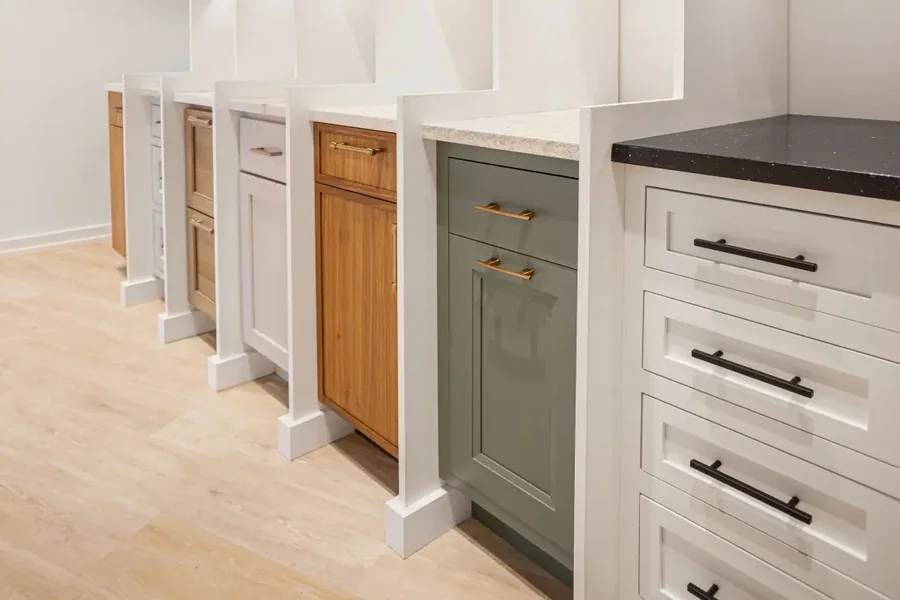
When it comes to choosing kitchen cabinets, you have to choose cabinets that suit the size, layout, storage requirements, style, budget and usage of a kitchen. The right kitchen cabinets should be able to offer sufficient storage space without sacrificing usability and cleanliness. First, measure the kitchen, and then determine the amount of storage space needed. Next, compare cabinet type, materials, construction, door types, finishes, hardware and cost. The type of cabinets must also be taken into account for their function with appliances, counter tops, light fixtures and the design of the cabinets. With some careful consideration, you can design a kitchen that will be beautiful and functional for years to come.
Start With Your Kitchen Layout And Measurements
When selecting cabinet colours or door styles, learn about the space you’re working on. Kitchen cabinets must be the proper size for the kitchen. Any slight error in measurement can cause trouble if cabinets, appliances or countertops are installed.
Take measurements of the length and height of each wall on which the cabinets will be placed. Record the position of windows, doors, electrical outlets, plumbing connections and ventilation. Also determine the area for appliances like the refrigerator, oven, dishwasher, and microwave.
Don’t assume that the new cabinets, if replacing existing cabinets, will be set up the same way. This is a good time to enhance storage and workflow.
Think about how you move around the kitchen. The refrigerator, sink, and cooking area should be arranged to facilitate some of the more common activities. This workflow should be considered when installing cabinets.
You should have the following measurements:
- The dimensions of walls and ceilings.The width of walls and the height of ceiling.
- The location of windows and doors.
- Appliance dimensions
- Plumbing and electrical locations
- Cabinets are available with storage for both the top and bottom cabinets.
- Corners and spaces that are unusual in shape
- The minimum space required for doors and drawers.
Having a simple kitchen plan before ordering the cabinets can be helpful. For larger kitchen improvements, have a kitchen designer or kitchen contractor verify the measurements.
Choose The Right Type Of Kitchen Cabinets
Most kitchen cabinets are available in three styles: stock, semi-custom, and custom. The choice will depend on your budget, kitchen layout and flexibility requirements.
The stock cabinets are produced in standard sizes. These tend to be the least expensive choice and can be suitable for a kitchen with a simple layout. They’re also typically quicker to install than custom-cabinetry.
Semi-custom cabinets have a wider variety of sizes, storage options, door designs and finishes. They are more expensive than stock cabinets, but are more flexible.
The custom cabinets that are made are especially made for your kitchen. They can utilize uncommon spaces and let you pick numerous elements. They tend to have a longer shooting schedule and a higher budget though.
While choosing between these options, pay attention to the worth you will derive from the product instead of just the price. Although a low-cost cabinet may seem like the ideal option, it won’t necessarily deliver the storage and durability you need for your kitchen.
Many homeowners find that semi-custom cabinets offer a good compromise. These are more versatile than stock cabinets but do not have the total expense of custom cabinetry.
Compare Cabinet Materials And Construction
The durability, appearance, maintenance and cost are all heavily influenced by the material that the cabinets are constructed from. Solid wood, plywood and medium density fibreboard (MDF), particleboard and laminate are common materials used.
Cabinet doors and frames are usually made of solid wood. It can be hard-wearing, attractive and sturdy but it can be more expensive and can swell and shrink due to humidity.
A material popular for making cabinet boxes is plywood, which is sturdy and relatively stable. A well-built plywood structure can offer a solid base without the drawbacks of conventional wooden floors.Quality-made plywood construction can offer a good base for all-day use in the kitchen without some of the pitfalls of wooden floors.
MDF is a smooth surfaced man-made wood material. Can be used for painted cabinet doors for consistent finishes. Some are of inferior quality and construction and thickness remain important.
Particle board is a compressed wood product made from wood particles. Generally it’s less costly than plywood, and it’s used in inexpensive cabinetry. It is highly dependent on the quality of the material used and its protection from moisture.
Practical, easy-to-clean laminate, thermofoil finishes may provide a good surface. They come in a variety of colors and styles, and can be used in contemporary kitchen design.
Don’t just evaluate cabinet quality on the materials used to make the cabinet. Look at the construction of the cabinet. Pay attention to the thickness of the cabinet box, drawer construction, hinges, mounting system, and fit and finish.
When ordering large quantities, see a sample cabinet, if possible, before ordering. Open all doors and drawers a number of times. Look and see if they are solid and move easily.
Consider Storage, Drawers, And Cabinet Features
Too many cabinets in a kitchen doesn’t necessarily mean useful storage. The number of cabinets is as important as the internal design.
First, consider what foods you already have in your kitchen. Deep drawers may be necessary for large pots. Plates and bowls might fit into cabinets close to the dishwasher. All day-to-day cooking equipment should be kept near the main cooking area.
Drawers are particularly convenient for certain kitchen equipment, as it makes it easier to see and access the items. Large drawers are good for storing cookware and shallow drawers are ideal for storing small items and utensils.
Some helpful features that cabinets might have are:
- Pull-out shelves
- Deep drawers
- Tray dividers
- Spice storage
- Corner storage solutions
- Trash and recycling pull-outs
- Appliance garages
- Resources for vertical baking tray storage.
- Adjustable shelves
- Soft-close drawers & doors.
Sometimes these features can drive up the price of your cabinets, so take the time to consider how you’ll use the kitchen to pick the cabinets that best suit your needs.
Special attention should be given to corner cabinets. Traditional corner cabinets can leave the hard-to-reach corners without any use. Corners can be made more useable, for example, with the help of rotation systems for shelves, or even pull-outs.
Take into account the height of the upper cabinets as well. Taller cabinets can offer extra storage (may be hard to reach without step stool). For high-ceiling rooms, consider cabinets that extend up to create a built-in appearance; the upper sections of the cabinets could be used for storing items that are not used often.
Select A Cabinet Style And Finish
After mastering the practical demands, all you need do is pay attention to the look. Kitchen cabinets are a highly visible item that takes up a lot of space in the room.
Shaker, flat panel, raised panel, and slab are the most popular styles of cabinet doors. Shaker cabinets are simple, have a frame look and can be used in traditional or modern kitchens. Flat-panel and slab doors can work well in modern interiors due to their streamlined design. Raised-panel doors will lend a more traditional feel.
Another critical choice is color. White and light colored cabinets will lighten up the kitchen and make it more open. Natural variation and warmth from wood finishes. Dark cabinets can help to create contrast, but can show up dust and fingerprints more easily.
Consider other finishes in the space before selecting. Cabinets must complement the counter top, backsplash, floor, appliances, walls and lighting.
Don’t need to match every element. A kitchen can appear more harmonious when materials are similar, but not the same.
If available, ask for a sample of the finished product before making your final selection. Natural and artificial light will reveal different colors. Finishes can look great in a show home, but look different once installed in the real home.
Don’t forget maintenance either! Surfaces with a shiny finish can show fingerprints more than others, and textured surfaces can be harder to clean.
Set A Realistic Cabinet Budget
Kitchen cabinets can be a big part of what a remodeling project costs. Having a budget in place will help you focus your search and avoid any surprises.
First of all, determine the amount you are willing to spend for cabinetry. Next cover related expenses like delivery, installation, hardware, upgrades, trims, fillers and accessories.
When comparing prices remember to compare the similar specifications. A cabinet quote can contain soft-close hardware and upgraded cabinets drawers or just not include them.
Avoid going for the lowest-priced cabinets. The kitchen is frequently used and cabinets are opened, closed, cleaned and stocked daily. If more expenditure is needed for important parts of the building to make it more durable and usable, this is good value.
Meanwhile, you don’t need all the upgrades. Tighten the purse strings around features you will be using on a regular basis.
It is helpful to consider cabinet decisions in three categories:
- Essential items: amount of storage, appropriate structure, proper size, and solid hardware.
- Helpful features: Pull-outs, specialty drawers, better organizers, and soft-close.
- Optional features: Things that are considered to be extra or more expensive than the basic features.
This way you can save money in the places that are important to you.
Check Quality Before You Buy
Cabinets may appear the same in a showroom but when it comes to the construction quality, it can differ significantly. Don’t rush into it: look at the details.
Test the operation of doors and drawers. Drawers must move easily and be firm. Hinges must function properly and not move excessively. The shelves should be sufficiently strong to hold the contents.
Check closely the edges and joints of the cabinet. The final product should be uniform, with parts snugly fitting.
Inquire from the cabinet supplier as to the guarantee. The clear warranty can give you more information of the manufacturer’s confidence in the product. Inquire about delivery times, installation needs, parts and components needed for replacement and what to do if the cabinets arrive damaged.
If using an installer, ensure that everyone involved is responsible for measuring, ordering, verifying delivery and dealing with installation issues. Confusion and unnecessary costly misunderakings can be avoided if there is clear responsibility.
Last, but not least, take into account the long term use of the kitchen. While a fashionable cabinet style might be trendy this year, a plain design could still be in use for years to come. Select cabinets that reflect your own style and intended use for the kitchen instead of going with the current trend that may become obsolete in time.
Final Thoughts
The key to picking kitchen cabinets lies in balancing style, usability, quality and price. Not all the best cabinets are the most costly or the most elegant. They are the ones that fit the kitchen, offer functional storage, match your lifestyle and will last long enough to be used on a daily basis.
Use accurate measurements and a sensible kitchen plan. Next compare the types, materials, construction, storage options, door types and finishes of cabinets. Always be mindful of the budget and examine cabinet samples before ordering a large quantity.
Most importantly, consider how your kitchen is used on a daily basis. A beautiful cabinet that is hard to access or isn’t large enough for all of your items will quickly become a bother. If design choices can help you carry out your daily activities, then you’ve created a kitchen that’s better organized, more comfortable and more satisfying overall.

3 Comments