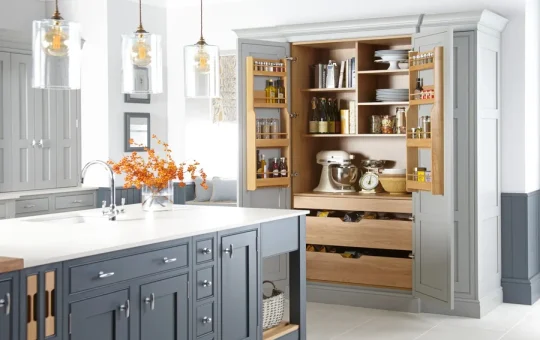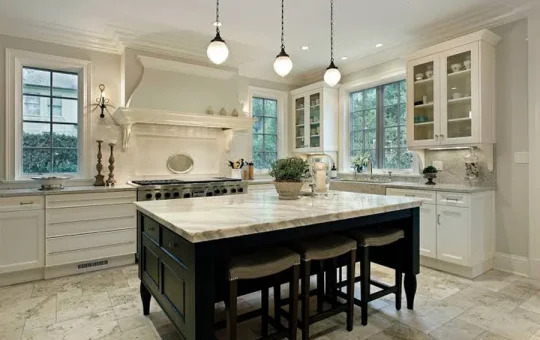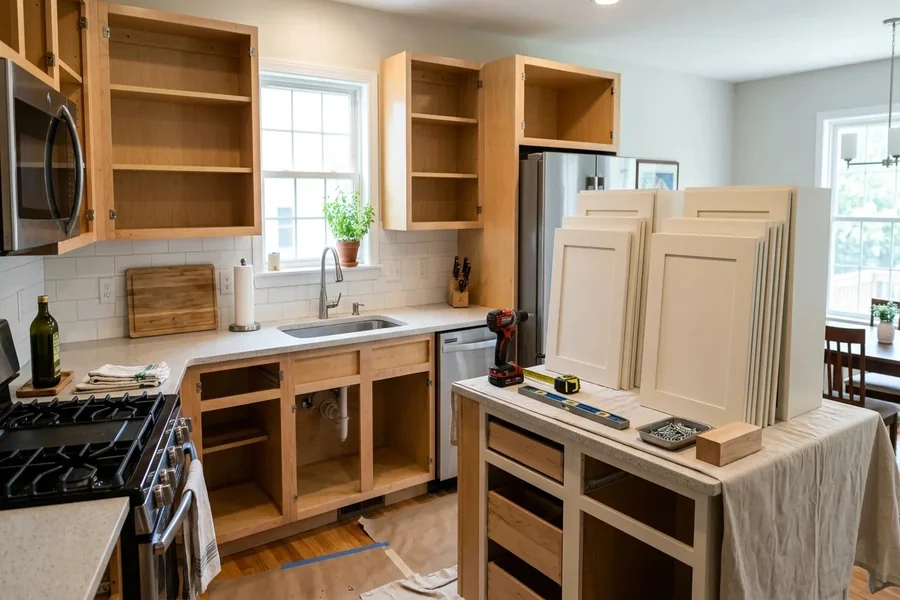
A kitchen’s cabinet refacing involves updating the exterior of existing cabinets by installing new doors, drawer fronts, and materials without removing the cabinet boxes. The replacement of the cabinet includes demounting old cabinets and mounting new ones. The right one is the best option depends on the condition of your existing cabinets, the kitchen layout, your budget, design objectives and the length of time you plan to live in the home. Refacing can be quicker and cheaper and replacement is more flexible to storage, layout and cabinet construction.
When your kitchen cabinets are somewhat dated but still usable, it can be hard to decide on cabinet replacement versus refacing. Both can provide a new look to your kitchen, and they come with different costs, timelines and levels of work.
Applying just a little bit of common sense is the key to making the right one. There’s also the question of the condition of your cabinets, how well your current layout is functioning, and if you need to improve the storage in your cabinets. Knowing the distinctions can help you spend your cash where it counts.
What Is Cabinet Refacing?
Without removing the main cabinet boxes, Cabinet Refacing will update the visible parts of your existing cabinets. With the majority of projects, the cabinet doors and drawer fronts are replaced. Exposed cabinet boxes are then finished with a new veneer, laminate or other finishing material.
Other hardware such as new handles and hinges may be added to the project as well. A few homeowners make adding accessories like pull-out shelves, drawer organizers, or soft-close hinges part of the same time.
The general concept is straightforward; maintain the existing cabinet design and modify its appearance and selected features.
The best time for cabinet refacing is when the cabinets are still in good condition and the kitchen configuration is suitable for your needs. Refacing can offer a significant improvement without the hassle of a full remodel, when cabinets are structurally sound but need an updated look due to worn finishes, outdated doors, or an old color.
Here are some of the most popular reasons why homeowners decide to reface:
- They are satisfied with the current kitchen layout.
- The cabinet boxes are solidly built.
- They desire a new door treatment or door style.
- They are looking to save money on Kitchen Remodel.
- They wish to have a quicker job that requires less demolition.
- They don’t want to waste usable cabinet boxes in a landfill.
Refacing isn’t just cabinet painting. Painting alters the original finish, refacing typically requires new surface materials and new doors and drawer fronts.
What Is Cabinet Replacement?
Cabinet replacement refers to the process of taking out the existing cabinets and replacing them with new ones. This provides you with a much greater choice since you are not restricted to the existing size, location or condition of cabinet boxes.
Replacement is the preferred solution when cabinets are broken, badly built or no longer meet your kitchen usage needs.
This also works well if the kitchen setup is causing issues. You might consider relocating the sink, increasing pantry space, adding extra drawer space or changing the placement of appliances. Refacing can be challenging or even impossible to achieve these changes.
A cabinet replacement project can include:
- Unloading and eliminating old cabinet boxes.
- Restoring or altering walls and flooring.
- Fitting new fitted cabinets.
- Modifying the size and arrangement of the cabinets.
- Replacing the plumbing and/or electrical when necessary.
- Installing new doors, drawer fronts and hardware.
- Installing counters, backsplash or other finishes.
Replacement tends to be more disruptive and more time consuming, since it involves a greater amount of the kitchen. It allows you to solve issues that refacing can’t, however.
Cabinet Refacing vs Cabinet Replacement: Key Differences
The primary difference between cabinet refacing and replacing is the amount of existing kitchen that remains.
With refacing, the cabinet boxes stay. In “replacement” the old cabinets are taken off and new cabinets are installed. This distinction has an impact on the cost, installation time, project flexibility, and project scope.
In general, this comparison is the following:
| Factor | Cabinet Refacing | Cabinet Replacement |
| Existing cabinet boxes | Kept | Removed |
| Design flexibility | Moderate | High |
| Changes to layout | Limited | Extensive |
| Project time | Usually shorter | Usually longer |
| Demolition | Minimal | Significant |
| Cost | Usually lower | Usually higher |
| Storage changes | Limited to modifications | Extensive options |
| Best for | Sound cabinets with an outdated look | Damaged cabinets or poor layouts |
| Kitchen disruption | Lower | Higher |
Cost
One of the primary considerations homeowners weigh when they’re comparing these two options is cost. In general, refacing is cheaper as you’re not paying for a full set of cabinet boxes and as much demolition.
Additional upgrades, labor, hardware, door style, materials and kitchen size will, however, affect the final price.
Replacement may cost more, particularly if the project requires custom cabinets, a change in layout, new countertops, plumbing or electrical changes.
Be sure not to rely on the headline price when comparing quotes. See what each quote covers. Low cost of the cabinet could mean that installation, hardware, cabinet removal and related work is not included.
Installation Time
The major advantage for refacing is that much of the kitchen stays intact which makes the job go quicker. The project can be carried out without the same level of demolition that is required for cabinet replacement.
The replacement will take longer, as the old cabinets need to be removed and the new cabinets installed. Depending on the layout, there may also need to be more work done before the new cabinets can be installed.
Refacing might be advantageous if it is important to keep your kitchen usable throughout the project.
Design Flexibility
Replacement is the most flexible option. New sizes and configurations of cabinets are available, along with new storage solutions, finishes, and construction styles.
The extent to which refacing can take place depends on the existing cabinet boxes. The cabinet arrangement can usually not be redesigned but can have its doors, drawer fronts, finish, and hardware changed.
It makes your decision easy if your kitchen is having some difficulties. When a different layout is desired, replacement is typically the more feasible solution.
When Should You Choose Cabinet Refacing?
Cabinet refacing is a great solution if your cabinets are structurally sound, but the exterior is outdated.
Inspect interior & exterior of cabinets before selecting. Inspect for water damage, rot, loose connections, broken components, and any other structural issues. Refacing might be considered if the boxes are stable, and there are no significant problems.
Refacing can be a good choice if:
- The current arrangement is satisfactory.
- There is ample cabinet and drawer space.
- The cabinets are in good shape.
- You are looking for a change of cabinet color or cabinet door style.
- Your remodelling budget is low.
- You need a fairly quick kitchen makeover.
For instance, think about a solid wood kitchen cabinet box which remains solid after years and years of use. The paint is faded, the doors are scratched and the hardware is not in style. The design is good and there is adequate storage.
In this case, it may not be necessary to replace the entire kitchen. Refacing might be the perfect solution for the aesthetics you’d like with the same functionality of the structure.
Refacing may also be a way to enhance functionality. Install new drawer hardware, organizers, pull out and soft closure systems make an older kitchen more user friendly.
When Is Cabinet Replacement The Better Choice?
Replacement becomes more appealing if the cabinets are in bad condition, either in terms of function or structure.
Old cabinets can be water damaged, particleboard may be weak or broken, boxes may be cracked or broken, shelves may be sagging, or the construction may make repair difficult. These will not be addressed by the outside refacing.
Another option for replacement is when the kitchen layout is not suitable.
If any of the following apply, consider replacing the cabinets.
- The cabinet boxes are damaged or deteriorating.
- Poor or inefficient kitchen layout.
- There’s a need for much greater storage.
- Want to move or resize cabinets.
- There are varying appliances that need to be accommodated.
- You’re looking for personalized storage solutions.
- You are contemplating a big kitchen remodel.
If, for example, your refrigerator jams on a cabinet door, or if you do not have any useful storage in your sink, it will not solve the problem to change the door finish. The replacement project provides the opportunity to reimagine the project as a whole.
The same goes for adding a kitchen island, adding drawer space, adding a full-height pantry or changing the location of big appliances.
How To Decide Between Refacing And Replacement
Separate appearance problems from structural and functional problems.
Refacing may be a good option if the real problem is the appearance of the cabinets when they are structurally sound. When your cabinets are damaged or you find the layout a daily hassle, it may make more sense to replace them.
Your budget must also come into consideration, but not exclusively. If a project involves less cost, but leaves aspects of the project unresolved, that is not necessarily the better project.
Think about the following questions:
- Are the cabinet boxes structurally sound?
When they are swollen, damaged or unstable it is generally safer to replace. - Do you like your current layout?
If the layout is successful, it makes sense to reface. Replacement offers far greater freedom if it doesn’t. - Do you need more storage?
Some storage improvements are possible when refacing, but more opportunities for changing sizes and configuration of cabinets are possible when replacement. - How much disruption can you handle?
A refacing will typically require less demolition and is a faster process. - How long do you plan to keep the kitchen?
For those planning to be here for extended periods, one of them should be selected to meet the need for a long time. - What does your contractor’s quote include?
Work out the labour and material requirement, hardware, demolition, installation, and other work required before selecting by cost.
It can also be beneficial to obtain quotes for both solutions. A competent contractor will be able to check the cabinet boxes and come up with problems that might not be evident from the outside.
Is Refacing Worth It?
Yes, for many kitchens. Refacing cabinets can be an excellent alternative to no repairs or complete cabinet replacement.
It enables homeowners to transform the look of their home without losing their functional cabinets. It can also minimize the amount of demolition and keep the project on track.
But refacing isn’t the solution to all kitchen issues. If the structure of your cabinet is already out of shape, or the layout is just not right, investing in new cabinets and finishes might just be delaying the inevitable.
Is Cabinet Replacement Worth It?
Replacing the cabinet may be a worthwhile extra investment if you are looking to replace a kitchen that does things differently, rather than looks differently.
New cabinets give you the opportunity to change your approach to storage, enhance workflow, choose new materials, and optimize space. The bigger project provides you with a chance to solve any other problems you have in your kitchen as well.
The important thing is to ensure that the size of the project corresponds to the real requirements. If you’re just looking to get a facelift, then a full replacement might not be necessary. In the event that you have more than a single useful issue in your kitchen, refacing might not be sufficient.
Final Thoughts
Deciding between cabinet refacing and cabinet replacement will depend on the condition of your cabinets, how you want to organize your kitchen, how much you have to spend, and what your plans are for the future.
Opt for cabinet refacing when the cabinets are solid, the layout is functional, and the main goal is to give the cabinets a new look. It can be an affordable solution to upgrade doors, finishes, hardware and selected storage features, and minimize demolition and project time.
If your cabinets are damaged, if you have different storage requirements, or if your existing setup just no longer fits the bill, then cabinet replacement is in order. It’s more expensive and longer, but it provides a much more substantial design and uses control over the kitchen.
Prior to finalizing a decision, check existing cabinets and get in-depth quotes. Not all the cheapest is best. The one that addresses your kitchen’s true needs and provides you with the desired results for years after.