When it comes to kitchen countertops, you need to select one that suits your cooking style, budget, design preferences, and maintenance requirements. But the most expensive countertop isn’t always the best. It should be long lasting, useful for your home and ideal for your usage of your kitchen. Common materials include quartz, granite, marble, solid surface, laminate and butcher block. When you are looking for the right kitchen countertop material for your requirements, you will have to consider its durability, cost, maintenance, look and ease of installation.
Consider How You Use Your Kitchen
When deciding on a countertop, consider how often your kitchen will be used. One that’s suitable for a lightly used kitchen might not be the best for a large, active family home.
First, think about your cooking style. Cook from a recipe the majority of days? Do you bake often? Do you put hot pots or pans on the counter? Is the kitchen used by children on a regular basis? This information can assist you in determining what features are most important.
A countertop that tolerates scratches, stains, heat and regular cleaning, for instance, would be a good choice for frequent cooks. A surface that is smooth and easy to clean can be particularly helpful, if you are baking for a long time. If you primarily use your kitchen for fast meals, you might give more weight to looks and cost.
Lifestyle can also have an impact on maintenance. Others countertop materials require periodic sealing or specific cleaning solutions. Others need little attention other than some regular cleaning.
In order to select a material, make a basic list of items that are important to you:
- Durability: Necessary for active kitchens and also cooking.
- Consider how much cleaning and upkeep that you will be willing to do.
- Budget: Include both the material and installation costs.
- Appearance: Consider the look of the countertop in relation to cabinets, flooring and walls.
- Resistant to heat and stain: Good for frequent cooking.
- Scratch resistance: Appropriate for households that cook on the counter.
- Longevity: Think about whether you wish to use the countertop for a few years or a long term of decades.
This method will help you avoid the temptation to select a countertop because of its looks. It may seem perfect in the showroom, but can be a pain in the rear in everyday use.
Compare Popular Kitchen Countertop Materials
However, there are numerous materials in use for countertops and a few are particularly frequent in homes. They each have their own advantages as well as their disadvantages.
Quartz is a favorite option as it looks uniform and needs little maintenance. It has been made using natural quartz, resins and other materials. Typically, quartz is stain and scratch resistant and it’s a practical choice for a busy kitchen. It is, however, sensitive to too much heat, so it is good practice to use trivets when handling hot cookware.
Granite is a natural stone that is highly durable and has a range of patterns. The individual slabs each have their own aesthetic, that can lend a natural appearance to any kitchen. Granite is typically very hard, resistant to heat and scratches, and requires periodic sealing as needed depending on the type of granite and according to the manufacturer’s guidelines.
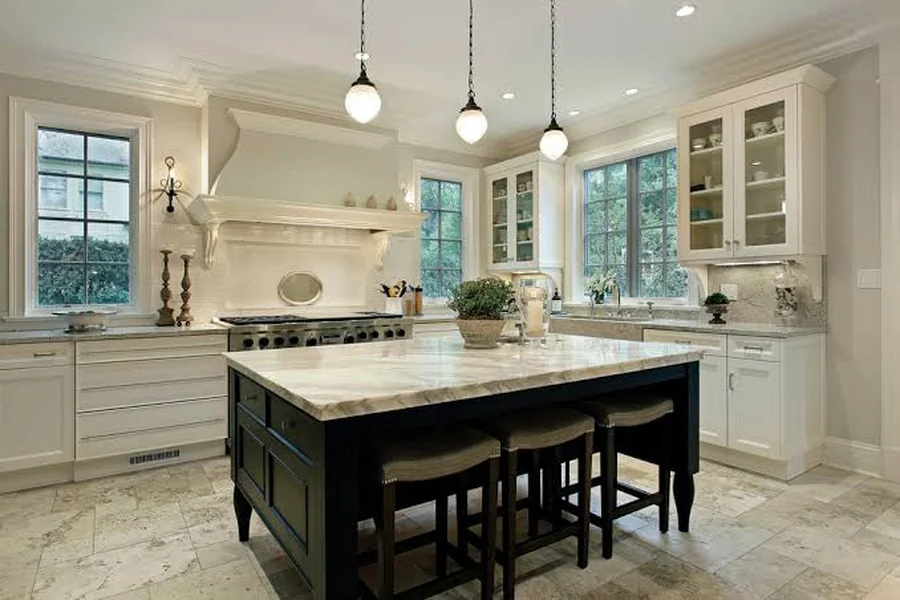
Marble is appreciated for its natural veining and classic look. It can be a great addition to a kitchen, particularly if the kitchen is traditional or modern. But, marble is softer and more porous than other countertops. May scratch and can stain or etch if not maintained. More desirable for homeowners who like the natural variation and don’t mind some wear and tear.
Solid surface countertops are manufactured and come in a variety of colors and patterns. Clean up is simple, and often minor scratches can be mended. Some other fabrics may have more noticeable seams than these. Solid surface is an excellent option for homeowners who wish for design versatility and a hassle-free maintenance.
Laminate is among the cost-effective countertop options. Today laminate is available in a variety of colours and patterns ranging from stone and wood finishes. Easy to clean and can function well in kitchens where the cost control is a priority. Laminate can, however, be more susceptible to cuts, scratches and heat damage than stone or other high quality surfaces.
Kitchen countertops with a natural appearance and a sense of warmth can be the butcher block or a wood surface. They are great for farmhouse, traditional and contemporary settings. Wood needs more maintenance than other engineered materials, but scratches and marks may be sanded and refinished. Cleaning and maintenance are important in ensuring that the surface remains in good condition.
No material fits all kitchen needs. It will depend which characteristics are of most importance to you.
Set A Realistic Countertop Budget
One of the most critical attributes to take into account when it comes to kitchen countertop selection is price. Comparing the price of countertop slabs though is not a complete solution.
Material, measuring, fabrication, edge details, sink cutouts, backsplash work, delivery and installation are all potential parts of your total cost. Sometimes, an existing countertop surface must be removed to allow for the installation of the new one.
The dimensions and design of your kitchen can impact the final cost. A straight run kitchen may be simpler to measure and install than a kitchen with corners, islands or odd shapes.
When you’re making a budget, determine what is most important to you. If you prefer natural stone options and are looking to save money, you may consider using natural stone in specific areas or opt for a less costly stone option. If the primary goal is to keep the overall renovation budget low, laminate and/or another more affordable material might be better.
Long-term value also needs to be considered. If you’re thinking you will need to do another renovation in a few years, a low cost countertop can be a viable option. However, those who intend to reside in their house for years to come might want to invest in a material that will suit their needs and that will last for years.
Request multiple quotes from multiple countertop suppliers or installers. Find out what’s covered in each quote to get a honest comparison. Often, the lower up-front cost isn’t the lowest cost overall because other installation costs may be included.
Think About Maintenance And Durability
Facing the kitchen countertop is a day-to-day wear. The surface can change over time due to water, food, oils, knives, cleaning products and hot cookware.
Therefore, durability should be taken into consideration with maintenance. A material can have a high degree of durability and still need to be sealed periodically. Some other substance might require minimal upkeep, but it might not be as resistant to heat or scratching.
Before making your decision ask the following questions:
- Should sealing be done frequently?
- Will it hold up to everyday kitchen stains?
- Its ability to resist heat.
- Is it resistant to scratches?
- Are there ways to repair the scratches or damage?
- What cleaners can be used?
- Will material suffer changes in appearance over time?
Consider what amount of maintenance you are able to provide. If you just want to do a basic workouts, you might want to invest more in a low maintenance countertop.
Following the manufacturer’s care instructions should also be followed. Even the toughest countertops can be damaged by the wrong cleaning products, if they are exposed to the heat for too long, or if they are mishandled.
Even a scratch-resistant countertop is not necessarily a good idea if a cutting board is used. Likewise, the placing of hot cookware on a heat sensitive surface can damage the surface. There are some countertop tips that can make almost any countertop last longer.
Match The Countertop To Your Kitchen Design
After practical considerations have been made, look at the look of your countertop. It should not be an eyesore in the kitchen, but should fit in well with the other designs.
Check your cabinets first! A simple counter may work better if your cabinets have a strong grain, decorative details or a strong colour. When cabinets are simple, a natural movement or pattern in the countertop becomes a focal point.
Take into account also the kitchen size. Dark or patterned surfaces can make a small area look cluttered, whereas lighter surfaces can make it look larger. But, it doesn’t imply that light-colored countertops are essential in small kitchens. The objective is to develop a balance that is pleasing.
Having countertop samples may help, but always view them in the lighting you will have in your kitchen. Colors are influenced by natural daylight, warm lights, and cool LED lights.
If possible, view a larger sample or full slab before making a final decision. Natural stone is known for its variability and the variations may not be fully evident in a small piece sample.
Look at these design elements as a whole:
- The colour and material of the cabinet.
- Flooring
- Backsplash
- Wall color
- Kitchen hardware
- Appliances
- Lighting
- Sink and faucet finishes
These elements should all be tied together on the countertop, not as a design decision.
Check Installation Requirements Before You Buy
The right paper can look great on the wall, but not work when your kitchen is the real world or if you don’t have the right installation equipment.
Take careful measurements of the space available but remember, this is frequently a critical step before fabrication when using a template. Openings typically must be provided for counter tops to house sinks, cooktops, faucets and the like.
The weight of material may also be crucial. Natural stone and other heavy surfaces might need appropriate cabinet support. Your installer can decide if it is necessary to reinforce more.
The countertop’s thickness and edge profile can also affect its appearance and cost. A simple edge can be lower cost, a more detailed edge can cost more with labor and materials.
Don’t forget to inquire about seams from your installer, either. If the slab sizes are not ideally suited to the size and shape of the kitchen, or the kitchen is large, seams may be necessary. Where they are placed may impact their aesthetics and performance.
It is also crucial to verify the installation dates. The time to fabricate the countertops may be extended after measurements are taken. When the countertop is to be part of a larger kitchen renovation, plan its installation with cabinets, plumbing, appliances and backsplash installation.
Addressing these matters early can avoid any delays and unbudgeted expenses.
Final Thoughts
There are many options to choose from when it comes to kitchen countertops and the key is to find the right mix of style, function, maintenance, and price. The answer is no one material fits all homeowners.
Begin with how you are using your kitchen. Next compare materials by durability, maintenance, heat and stain resistance, appearance and cost. When drawing up a budget for your project, don’t neglect the cost of fabrication and installation.
For those homeowners who are looking for ease of maintenance, quartz may be a viable option for them. Granite can be attractive to the natural stone and tough buyer. Marble can be a good option for individuals who appreciate the beauty of nature and are willing to embrace the wear and tear that may occur over time. Laminate is a budget choice, and wooden and solid surface materials are combinations of looks and utility.
Most of all, select the countertop that best suits your own living, not the fashion. The right countertop should be useful, beautiful and functional for years and years. When carefully compared and planned, it is possible to find a kitchen countertop that will feel good in your home and on your wallet.