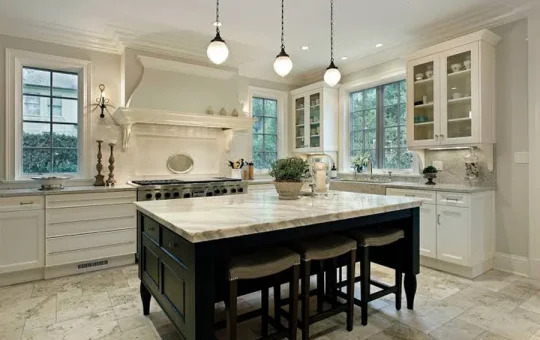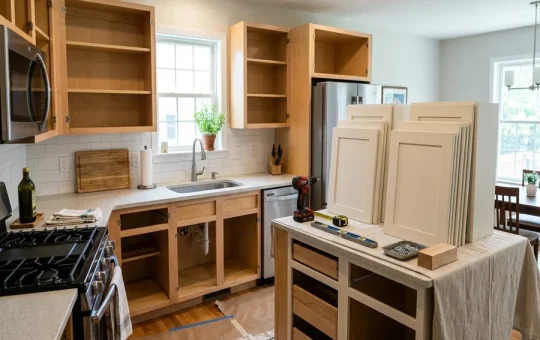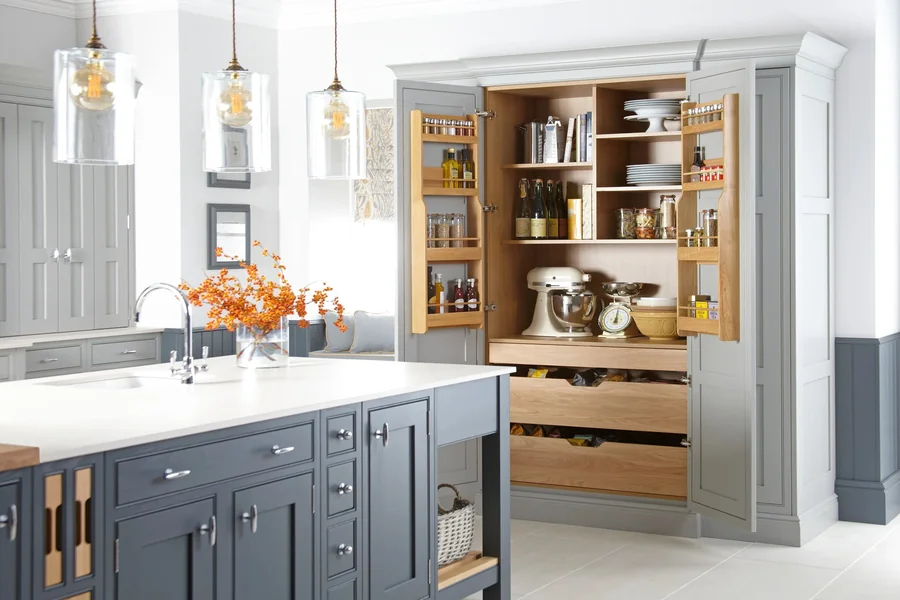
Kitchen storage is the art of organizing the cabinets, drawers, shelves, countertops and other spaces in your kitchen so food, cookware, utensils and appliances are easily stored and accessible. When looking to make a change in kitchen storage, the first step is to get rid of unused items, to organize similar items by grouping them in containers, and to make use of the vertical and hidden spaces. Drawer organizers, pull-out shelves, cabinet racks, wall storage and labeled containers are all ways that can help create more space without doing a kitchen remodel. The kitchen should be “organized” so that things are easier to do and items that are used regularly are within reach.
Assess Your Kitchen Storage Before Making Changes
When looking into purchasing organizers or shelves, make sure to examine the current functionality of your kitchen. Efficient kitchen storage isn’t just about having more cabinets. It’s about finding ways to make the space you have more usable.
Open all the cabinets and drawers first. Inspect and observe areas that are hard to access. Some cabinets might contain articles that you use hardly ever while others are not organized well.
Unpack an item from one storage area at a time. Don’t clean all the kitchen at a time, it gets too much to handle.
While sorting, break things down into manageable categories:
- Store and use frequently
- Keep but use from time to time
- Donate or give away
- Recycle or dispose of
- Move to a more suitable location
Pay special attention to duplicate items. There are multiple uncoordinated kitchen items that are used infrequently in the same combination, such as multiple servings, a few containers, a few pans, or a few small appliances.
After you’ve stripped away the clutter, consider how you use your kitchen. Keep daily plates, glasses, cooking tools and ingredients within easy reach. Items not frequently used can be stored in higher cabinets or deeper storage areas.
This initial step can have a surprising impact. It’s possible that you don’t require any extra kitchen cabinets in any way. The problem might be a matter of optimizing the use of current storage.
Make Better Use Of Cabinets And Drawers
The amounts of usable space in cabinets can be greater than they seem. The issue is that a lot of that area can be hard to get at.
A quick and easy way to do this is to install shelf risers. These provide another compartment within a cabinet so that plates, bowls, mugs or cans can be stored without being stacked on top of each other.
Another effective alternative is pull-out shelves. They can be used to move objects toward the user from the rear of a cabinet, rather than reaching into a tightly packed, dark area. This is particularly helpful for food containers, food in a pot or pan, and pantry items.
Cabinet doors can also provide additional storage. Lightweight objects can go on small small racks or organizers, like:
- Measuring spoons
- Cutting boards
- Pot lids
- Cleaning supplies
- Kitchen towels
- Spices
Drawers should be paid attention to as well. A big drawer can fill up with all sorts of tools and utensils that have nothing in common. Divide or organize with dividers to make separate sections.
For instance, one section may contain cooking tools, another a section for cutlery, and a third a section for measuring tools. The aim is to provide a definitive place for each category.
You can use larger boxes horizontally by deep drawers if you have a lot of boxes. This allows you to see what you’ve got and minimizes shifting multiple items to access a single item.
Use Vertical And Wall Space
If the floor and cabinet space are restricted, consider going up. The vertical storage in kitchens utilizes empty wall and cabinet space for storage.
Open shelves are a possibility. They can be used for storing items that are used often, such as dishes, jars, mugs or cooking ingredients. Just don’t add too many things to them though. A cluttered shelf can make the kitchen look messy and it can be harder to clean the kitchen.
A wall-mounted rail might also come in handy. It might be used for storing cooking utensils, small baskets, or other commonly used items, depending on its design.
The area above the countertop is often overlooked. This can be used for a narrow shelf or rail without the loss of valuable counter space.
Other storage potential is found in the sides of cabinets. Organizers come in narrow sizes that can be used to store things like cutting boards, trays or baking sheets.
When space is limited between cabinets and appliances in the kitchen, take careful measurements before making a decision on how to utilize the space. For spices or bottles or for pantry use, a narrow pull-out unit may be the right choice.
Vertical storage is best for light, frequently-used items. Don’t design storage that is too high or the other way around to reach commonly used items.
Improve Pantry And Food Storage
An organised pantry can help to keep your kitchen tidy, space-saving and decrease food waste. Begin by putting food in groups, rather than just putting them in a place.
Bring baking supplies together, canned goods to another place, and snack supplies to a different spot, for instance. That’s why it’s easier to find what you need when preparing your meals.
Dry foods like rice, pasta, flour, cereal and lentils can be stored in clear containers. They provide a quick glimpse of what is on the shelves, keeping them more organized.
You don’t have to place each food in a container, however. Only use containers when they will enhance visibility, freshness, or organization.
A label can also be helpful, especially if there are multiple containers that are similar. Items are easier to recognize by using simple labels like “rice” or “flour” or “pasta.”
First In, First Out: the principle of food storage. Arrange older products in front and newer products in the back. This can help to consume food before its expiration date.
For cabinets without a pantry, consider adding narrow pull-out shelves or stackable baskets. These can form zones that are different from one another for different types of food.
Place heavy objects on the bottom shelves if possible. Lighter products can be kept at a higher level. This allows for a more convenient and secure storage area.
Organize Countertops And Small Appliances
Even a medium-sized kitchen can feel cramped when cluttered on the countertops! It’s a simple thing to make a choice on what should or should not be on the counter in the kitchen.
Consider frequency of use for each appliance. That toaster or coffee maker used daily in the morning should be a permanent fixture. If you use an appliance only a few times a week, it’s probably better stored in a cabinet.
If possible, establish an appliance storage area. Store appliances alike and not scattered about in the kitchen.
Another helpful tip for minimizing clutter on the countertops is to rearrange the countertop storage for smaller items. For instance, avoid having utensils lying on the counter and instead, use an utensil holder for the tools you use every day.
While some things need to be easily accessible, don’t think “easily accessible” is the same as “easily visible.
One of the helpful tips is to assign each item a specific place in the house. If there’s not an obvious place to store something, it’s more likely to stay on the countertop.
Another feature to take into account would be the space surrounding your sink. Cleaning supplies, sponges and brushes can easily clutter. These items can be stored in a small counter-top box or caddy that doesn’t take up space.
Keep in mind storing should complement your lifestyle. If you are cooking often store cooking utensils near to the place of cooking. Store items next to the appliance if you use a specific appliance in the morning.
Create A Storage System That Is Easy To Maintain
Today the kitchen can be tidied up perfectly, and a week later, it’s a disaster if the storage system is messy.
The best kitchen organization ideas are simple and easy to do everyday. Don’t establish a multi-step routing to store an item away.
Be sure to use general terms rather than specific ones. For instance, it is far more effective to have a cooking utensils drawer instead of a drawer for wooden spoons, spatulas and tongs.
Think about who is going to be using the kitchen. If multiple family members share a space, ensure that there is easy access to everything and it can be retrieved by all.
Also, periodically audit kitchen storage is useful. New cookware, appliances and food containers can slowly fill space.
It can be avoided by a quick look at the season. Clear away items not in use and tidy up areas where things are getting cluttered.
Here are some easy tips for maintaining kitchen storage:
- Put items away in the original location after they are used.
- Don’t maintain any extra copies.
- When shopping for food, go through the pantry first.
- Keep things together.
- Have commonly used items easily available.
- Leave some room in cabinets and drawers empty.
- Reassess storage when your cooking habits change.
Don’t have to rearrange the whole kitchen each month. Simple changes can make a big difference in the system’s operation.
Final Thoughts
A renovation and costly storage solutions aren’t always the only way to enhance kitchen storage. Many times it is possible to make the biggest improvement just by eliminating unnecessary items, sorting the rest and putting them to better use.
Begin with the parts which are most frustrating. A pull-out shelf is a consideration if a cabinet is not easily accessible. Use dividers in drawers if they are full. If the countertops are too full, make a list of the necessary appliances. When it’s hard to locate food in the pantry, establish clear categories and utilize containers as needed.
The secret is to plan the storage according to how you really use your kitchen! Put items which are used often within easy reach, and those which are used less often in less easily accessible places.
Ideal kitchen storage should be time-saving, space efficient and convenient for day-to-day cooking. Even a small kitchen can be more efficient and functional, with the help of a few simple adjustments and a convenient maintenance system.